четвъртък, 15 декември 2016 г.

References

References mentioned in the presentation:

Teresa Amabile, How to kill creativity, Managing creativity

Morris I. Stein, Stimulating creativity: Individual procedures, Preface, Page XIII
CKGSB Knowledge, Juliet Zhu, How the environment impacts creative thinking, link to the experiment discription
Adam Price, Ted talk, TedxUniversity of Nicosia, Space matter- using space to stimulate creativity, link

Continue Reading...

Synopsis

Question of Research
Synopsis
What methods can be employed to develop our creativity in relation to
technology and studio practice
PETROVA Tsveta MA Illustration


First thing I did when in the beginning of my research, was deconstructing the question. Even though I know the meaning of the words, actually writing down their definitions and researching them a bit more in depth, they turned out to hold so much more to them than I expected. That made the question even more vast, and also challenging. Basically, I was in front of three key words: creativity, technology and studio practice. I wanted to find a concrete sub-question in order to make my research area a bit more specific. I was interested, at first, in how technological development can help stimulate the creative process.
The first step I took, was researching the scientific and philosophical side of the question, finding theories, studies, quotes etc. I stumbled upon a lot of sources that I find intriguing, one of them being Teresa Amabile theory on the 3 components of creativity (domain-relevant skills, motivation and creative-thinking skills). This is where my sub-question changed direction- the motivation component in Amabile's theory is highly influenced by the environment. There is a quote by Morris Morris as well stating that environment has a huge impact on creativity. From this point on, I decided to continue my research exploring that. I found some interesting studies on how physical surroundings can actually have an influence on our creative process. Although sometimes I've been quite going quite distant from my question during my research and thinking process (as seen on my blog) I think I filtered well enough my information for the presentation unit.
On the next stage, after I had defined my sub-question and researched the theoretical side of how environment can stimulate creativity, I decided to conduct a few interviews. Instead of making it as a survey for random people on the internet, I decided it would make more sense for me to choose a few creative practitioners and to speak to them about their experience. I had the luck to speak to a few successful creatives about their ideal working space, which I feel makes it easier both for me and my the people I presented my research to, to illustrate the theoretical part of it. I received some quote different answers but the main point all these people made when explaining why these are the perfect condition for them, was on avoiding distraction. They all had their own strategies, including self- discipline on how to work best avoiding getting distracted, and shared with me what they find motivating about their working space. Turns out, the same things that can be motivation, can be a distraction at the same time. The easiest example- the internet. It is an amazing source of information and opportunity for visual research that can be stimulating for the preparation process, but also offers all kinds of distractions that can keep us away from the drive to create.

What I like about this unit is that we all had to do our research the way we wanted- this is why we all got such different presentations and everyone had treated their question differently, which I find amazing. Being given this freedom also put me in an awkward position in the beginning- as a weakness, I admit of being quite indecisive during the first stage of my research. I changed directions a few times, but as much as I worked on my research methods, it was all becoming more and more clear with the time. I think part of the problem in the beginning was the overly critical thinking of mine, believing that most of my ideas aren't good enough, that made me limit myself to a certain point. Quickly I became aware of this, and took it to another extreme, where I was getting too distant from my question during my reflections. This is the first time I am working on such a vast research question and in the beginning it was quite challenging for me to get the balance of working with that kind of freedom and the idea that there aren't wrong or right answers.
At the end of the unit I feel content with my work, I believe I have presented a coherent presentation, even though my blog posts might seem all over the place in direction of thinking. I feel like exploring different directions of the questions before choosing the right one for me was an indispensable part of the process. The unit has definitely enriched me as a creative practitioner and had given another opportunity the explore the theoretical and social part of the creative process.


Continue Reading...

Presentation slides

Continue Reading...

Distraction

The ideal creative working space should not distract us from the drive to create, it should be a stimulating environment.
But sometimes same things could be both distraction and motivation.

The same way the Internet could offer us so much information, the opportunity to see and read so much inspiring materials and keep us motivated, it could also bring us in front of so many distractions, such as social media, random articles, videos etc. The key here is self- discipline and it is necessary to keep up with the drive to create. Sometimes we need to make ourselves work even if do not feel particularly inspired at the moment, and find a motivation ourselves.
Continue Reading...

Interviews with creative practitioners

       I wanted to include a social part in my research, such as a survey or interview. It didn't made much sense to me to make an anonymous internet survey for random people, so I interviewed a few creative practitioners that are quite succesfull in what they are doing, including a musician, an illustrator, and a group of filmmakers.
      They all had some interesting responses and strategies on how environment stimulates them and how to beat distraction- such as moving changes places around the table, or working in different outside spots. For some the comfort of their home is the ideal working space, but for some it is a distracting environment. What I found out is that even though a lot about it comes to personal preference, there are some universal factors as we found out in professor Julien Zhu's experiment I referenced before.

The interviews
I will not be sharing the names of the people I interviewed on the Internet as some of them asked me to.
The illustrator shared with me that she prefers to work either outdoor, or in a coffee shop as she find the comfort of her own home too distracting. Another point she makes is that her apartment space is quite small and always looks messy, which adds to the distraction. (another reference to Juliet Zhu- people working in an organised environment tend to perform much better than those working in clutter)

The musician has turned his own home in his ideal working space- quite the opposite of our previous interview. He had covered the walls and even the ceiling with his own sketches, notes and illustrations, which is what motivates him. There he can isolate himself and work without being interrupted in his little world he had created for himself.

The filmmakers are a quite interesting example. As they are supposed to work as a team, distraction is often a problem. But they are aware of that and have a certain strategy- every meeting they have, first 1-2 hours are completely useless, until they get it all out of their system. After that, they can work on their full potential. Another strategy they shared with me- when writing a scrip, they would change spots every hour so that would keep them motivated, giving them to possibility to change the angle- physically and mentally.
Continue Reading...

неделя, 27 ноември 2016 г.

Architecture for our minds

After listening to a speech by Adam Price on using space to stimulate creativity, he had put some interesting thoughts in my head.
Price talks about modern workspaces, endless rows of desks and computers, and even compares them to Dante's Inferno- where everyone has an assigned spot and no privacy whatsoever.


Such environments are missing out on the three big factors he claims are most important for group creativity- comfort, openness, connection. After seeing that, I immediately thought of an opposite example, such as the work environment that Google offers to their employees in order to stimulate their creativity and keep them happy at work.


That is just a simple example on how environment can have a huge impact on our work. 
Even though everyone's perfect work space is based on their own personal preferences, that keep an individual motivated, there are some creativity-encouraging factors that can be immediately spotted as a common point.  

Continue Reading...

Environment stimulation

Creativity occurs in a social context and is a function of the transactional relationships between the individual and his environment—the creating individual is both affected by and affects his environment.  (Morris Stein 1953)

In my previous post, we met Teresa Amabile's theory that creativity needs 3 components:
-the person needs to have learned sufficient skills in his own domain
-the person needs to have developed a passion for his work
-the person needs to be intrinsically motivated

(Intrinsic motivation refers to behavior that is driven by internal rewards. In other words, the motivation to engage in a behavior arises from within the individual because it is intrinsically rewarding.source)

Intrinsic motivation is sensible to environment- the same environmental conditions that increase motivation, also increase creativity. That means, the person needs to work in an environment that is not distracting them from the drive to create.

A personal safe space is key in stimulating creativity. Inspiration and/or motivation can be provided from a perfect environment/ studio space- this is why a lot of people prefer to clean and tidy before starting to work on a project. Tools. Sometimes "tricking" ourselves into inspiration by buying a new tool can help. Visual research - seeing great examples of artworks increases the inspiration and will to create.

I also stumbled upon a very interesting study by CKGSB Professor Juliet Zhu on how environment impacts creative thinking. Basically she conducted a series of lab and semi-field experiments to examine the relationship between environment and creativity.
A lot of the factors influence us on an unconscious level, so we don't really realise how they affect us. The first factor Professor Zhu explored is Noise. The results were that people are most likely to think creatively in a moderate noise environment which I personally did not find surprising as I always prefer it when I work. Next factor is Light- what she found out was that people are actually more creative in a dim- light room. She also conducted a Color test, in which people had to design toys, looking on either red or blue parts. The results were drastically more succesfull for the blue team- the reason is that blue generates associations with ocean or the sky, so people are more likely to reach a more open-minded mindset. And another one of the test was about Clutter. People in an organized room perfomed much better than those set in a disorganized one. 


Continue Reading...

Components of Creativity

The environment a creative practitioner is in, has a great effect on their work. When I say environment, I mean both physical (location) and psychological. As an example, I can mention the story of E-Ink, which is the first electronic ink service, and products such as the Amazon Kindle use their technology.

      The environment of the MIT Media Lab was highly conducive to the team’s work.Housing physical and social scientists from a wide array of disciplines, the lab fosteredcross-pollination of ideas. There was a high degree of psychological safety, where peoplespouted “wacky” ideas without fear of ridicule. Moreover, a range of resources facilitatedexperimentation. Finally, even undergraduates in the lab enjoyed a great deal ofautonomy to follow their hunches. (Source 

Componential Theory of Creativity - Harvard Business School)


The document I just mentioned also offers us a glimpse into Theresa Amabile's theory on creativity.

The influences on creativity include three within-individual components: domain-relevant skills (expertise in the relevant domain or domains), creativity-relevant processes (cognitive and personality processes conducive to novel thinking), and task motivation (specifically, the intrinsic motivation to engage in the activity out of interest, enjoyment, or a personal sense of challenge). The component outside the individual is the surrounding environment – in particular, the social environment.


Expertise, or Domain-relevant skills include knowledge, expertise, technical skills, intelligence, and talent in the particular domain where the problem-solver is working – such as product design or electrical engineering. These skills comprise the raw materials upon which the individual can draw throughout the creative process – the elements that can combine to create possible responses, and the expertise against which the individual will judge the viability of response possibilities. 

Domain- relevant skills are essential to critical analysis, decision- making and evaluating potential of eventual ideas.

Creativity-relevant Processes(originally called creativity-relevant skills) include a cognitive style and personality characteristics that are conducive to independence, risk-taking, and taking new perspectives on problems, as well as a disciplined work style and skills in generating ideas. These cognitive processes include the ability to use wide, flexible categories for synthesizing information and the ability to break out of perceptual and performance “scripts.” The personality processes include self-discipline and a tolerance for ambiguity. 

Creative skills depend on an individual's personal practice and are key in project progression.

Task Motivation. Intrinsic task motivation is passion: the motivation to undertake a task or solve a problem because it is interesting, involving, personally challenging, or satisfying – rather than undertaking it out of the extrinsic motivation arising from contracted-for rewards, surveillance, competition, evaluation, or requirements to do something in a certain way. A central tenet of the componential theory is the intrinsic motivation principle of creativity: People are most creative when they feel motivated primarily by the interest, enjoyment, satisfaction, and challenge of the work itself – and not by extrinsic motivators. Because, as research has shown, salient extrinsic motivators can undermine intrinsic motivation, their presence or absence in the social environment is critically important. So, too, is the presence or absence of forces that can support intrinsic motivation. 

Motivation is important through the whole process of creation. It can be influenced my many factors.

Continue Reading...

понеделник, 21 ноември 2016 г.

the drive to keep creating


I just listened to incredibly inspiring speech by Elizabeth Gilbert about devotion and drive to creating. Long story short, she shares about her past, her multiple failures in writing, but also about her devotion that brings her to where she is now. 

Failure sure is a part of every creative process. Not everything you would ever make will be great. Or even pieces you find good, after some time you will find horrible. Failure is always around the corner, but that is okay. It tests your passion, your drive, how committed you are about what you are doing. It might be harder to succeed and get recognition in the world of art than in some other fields, but that is part of the ride. Creativity is key, but keeping it alive is as essential. Striving for the state of mind that is "the zone", finding an inspiration and just keep creating and evolve is what can fight discouragement. What Elizabeth says in her speech about writing is that she loves it  more that she hates failure, more than she loves her ego, more than she loves herself- writing makes her feel at home. This is where the drive comes from- exploring your passion. 

Continue Reading...

вторник, 15 ноември 2016 г.

Creative Methods, Art in the service of the mind

There is a quote about art that I really like, and agree.

“Eleanor was right. She never looked nice. She looked like art, and art wasn't supposed to look nice; it was supposed to make you feel something.” 
― Rainbow RowellEleanor & Park

Which made me think of contemporary art. A variety of methods and experimentations. And then my mind jumps to Marcel Duchamp, and his mission to put art back in the service of the mind.
We've all seen his readymades.


Makes you think, right? Is it art, is it not, Duchamp brings up a revolution in the world of art. 

“An ordinary object [could be] elevated to the dignity of a work of art by the mere choice of an artist.” (Duchamp)


The readymade also defied the notion that art must be beautiful. Duchamp claimed to have chosen everyday objects “based on a reaction of visual indifference, with at the same time a total absence of good or bad taste….”2In doing so, Duchamp paved the way for Conceptual art—work that was “in the service of the mind,”3 as opposed to a purely “retinal” art, intended only to please the eye. (MoMA)

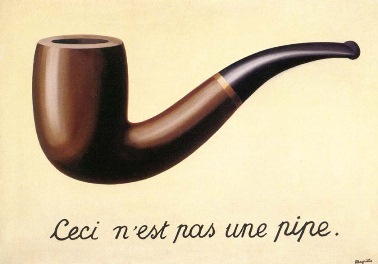
The object itself is not the art (or is it?), the fact that it makes you wonder, it makes you feel, this is the art. The experience of the interaction creates the artistic value. By putting a readymade in a museum or as a part of exhibition, Duchamp creates a shock-experience, which we can say is a method of creating an experience. While on the subject of putting art in the service of mind, I can't miss to mention another popular piece, Magritte's Ceci n'est pas une pipe.


The painting is not a pipe, but rather an image of a pipe, 


Continue Reading...

Some more about Technology and Creativity

     After we have investigated the technology and creativity dilemma in its technological development sense, I wold like to explore another aspect of the term technology, being the process itself of creation.
    There are a few aspects we can think of when it comes to creative process and how to stimulate it. Workspace, tools, inspiration... and they all come up to personal preferences. Some people prefer to work at home, or in a quiet environment, while other prefer to listen to music or interact with others in order to create better working conditions for their creative process. Tools- a topic we kind of touched in the previous post- there is digital media, traditional media, and both of them offer a range of tools. It's up to the creator to choose what they are more confident doing, or if they wish to challenge themselves using a new tool. And then we come to the inspiration part, the zone- that wonderful state when ideas are flowing everywhere and you just can't wait to make them reality, lose track of time and just let yourself get consumed by your own creativity. But there's the other end of the stick- art block. The exact opposite of the zone. When you feel stuck, nothing comes to mind, and creativity is a problem. You can't be in the zone all the time. The creative process has it's ups and downs, and it's all part of the experience, let's embrace that. Sometimes nothing seems to work out, but every creative practitioner has been there.We all know that at some point we'll get out of that state. There is an amazing video about that "rollercoaster" experience of ups and downs during the creative process, made by the filmmaker SoSonia, I advise you to give it a look!


Continue Reading...

Relationship between the terms of CREATIVITY and TECHNOLOGY

           As we already defined, the terms of CREATIVITY and TECHNOLOGY are quite vast. Time to get specific and concentrate in one area. As we are creative practitioners here, I would like to explore the terms in the artistic field.
         Technological development in art is a fact. We can take
the example of tools and materials. We have graphic tablets, mechanical pencils, artistic internet platforms, but canvases, paper and exhibitions still exist. That kind of technological development offers us quite a few options to make things easier, but is this necessarily something artists need or want? We are humans after all, and the need to touch or see a physical original of a painting keeps some artists away from digital art. But nonetheless, digital arts holds a lot of options to change and edit artwork, in ways that are not possible in traditional art.Therefore digital art becomes a method, alternative, another medium of creating artwork, not a better way to do so. It puts people in front of the dilemma tactile qualities vs. technological benefits. It all comes to a personal choice, the way kindles did not put the end of physical books, digital art is not the end of traditional creation.


         I have put examples of two pieces I have done, a digital one (on the left) and a traditional one (on the right). I am not here to defend either one of those methods or to claim if any of them is better or not. Technological development definitely gives us a variety of amazing options, but at the same time lacks the feel of texture that traditional art has to offer. There are plenty of amazing printing options, but the fact that there is no physical original can be quite bothering. In the phylosophical and literary review La Liberté de penser (Paris 1848) we have some interesting reflections about art and original. Kant says that the soul of the artwork is essential for the artwork and its quality. But later then, pop art appears in the art scene, there are prints and collages and all this new mediums and art pieces that are distributed in multiple copies, all the same, no original. Does that destroy the soul of the piece? Does an artwork even have a soul without an original? That question seems to be a major problem on the art scene in France after the popularity of pop-art. Now illustrators don't seem bothered by that, but people still seem to have a prejudice about digital work, a massive part of the common audience does not support digital art for not being "real art", as it is assumed that "that computer does everything". Knowing this is not the case, we can say that digital art can still be assumed as misunderstood among non-artists.
Continue Reading...

вторник, 27 септември 2016 г.

Defining the terms

First thing I always do when starting a new research, is to define the key terms in the question.

"What methods can be employed to develop our creativity in relation to technology and studio practice?"

We can tell our key words are creativity and technology/studio practice.
But in order to make it all more clear, let's write down their definitions. Even if we clearly know their meanings, getting closer to their definitions can give us more ideas ideas and let us approach the question in detail.

Methoda particular way of doing something;

Creativitythe ability to produce original and unusual ideas, or to make something new or imaginative;

Technology(the study and knowledge of) the practical, especially industrial, use of scientific discoveries;

My first associations with these words were kind of different to their original definitions, so I guess looking them up at the dictionary clarifies the terms, even though I already did knew their meaning. When it comes to creativity, I immediately thing of art, the act of creating art. But the word itself represents more of the ability of that, and is not limited only in art, but can be applied literally in every domain or situation. The case is similar with technology too- my first associations are everyday objects of technology we use (laptops, phones, etc). Then again, the term itself holds much more to itself.


Technology, noun/ 

1.
the branch of knowledge that deals with the creation and use of technical means and their interrelation with life, society, and the environment, drawing upon such subjects as industrial arts,engineering, applied science, and pure science.
2.
the application of this knowledge for practical ends.
3.
the terminology of an art, science, etc.; technical nomenclature.
4.
a scientific or industrial process, invention, method, or the like.
5.
the sum of the ways in which social groups provide themselves with the material objects of their civilization.


We can that technology is a process. Is it every process though, can everything be technology, anything made by hand maybe?

definitions - Cambridge dictionary


Continue Reading...

вторник, 20 септември 2016 г.

Introduction

This is a research exercise, or let's say a series of exercises, to help understand the importance of research and the methods to do it. When in front of a question of research, usually chaotic ideas start flowing around. While organizing these thoughts, and going through with the research they change, evolve. Also, there are many different directions where we can take this question to, just like a crossroad. I hope by writing everything down, and organizing it in a blog, it would keep my research from getting "messy".
Continue Reading...